


Need help?
Talk to trip expertAirport in the Himalayas: Your Gateway to the Everest Adventure in 2026
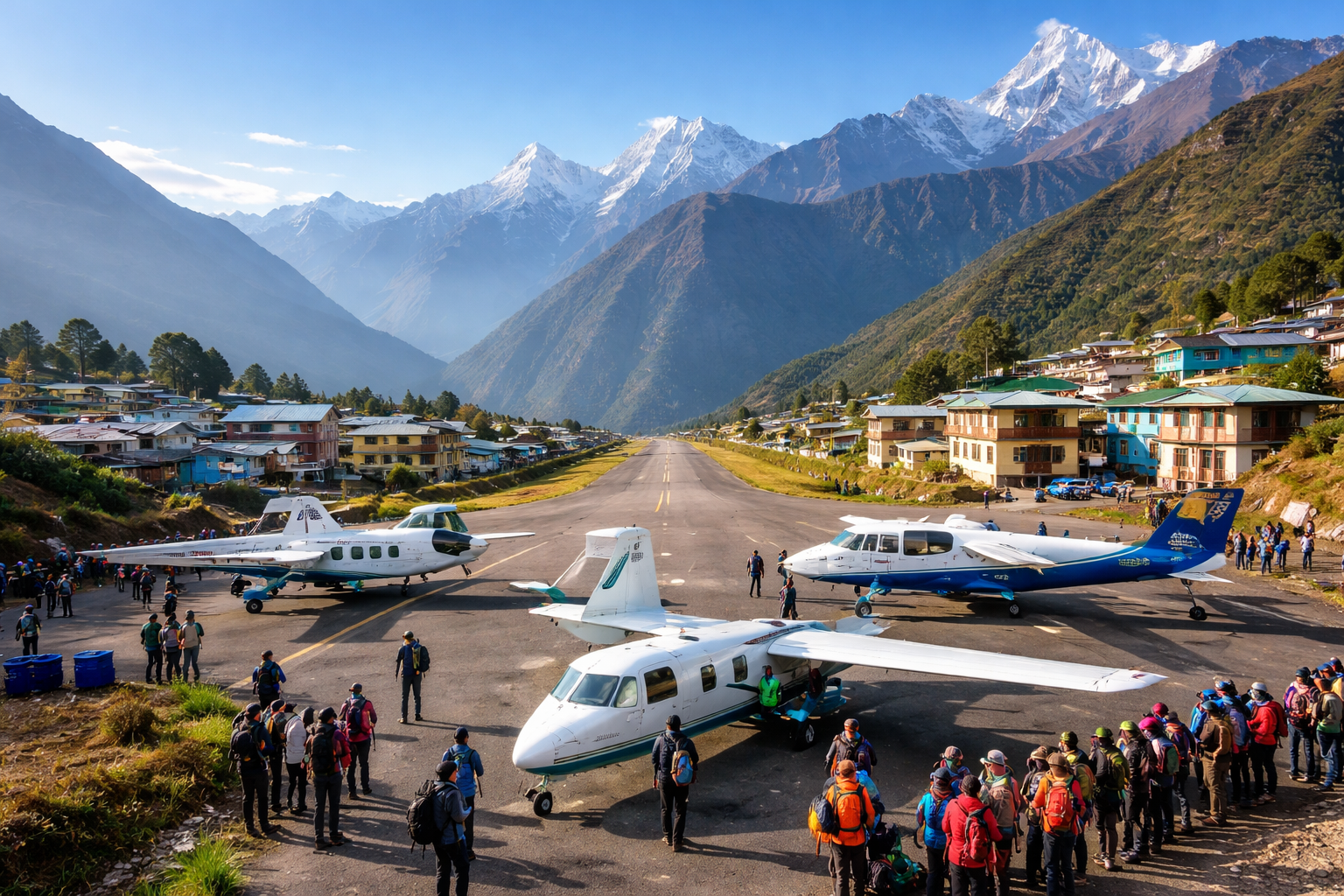
Nepal, a land of towering mountains, ancient culture, and breathtaking landscapes, attracts trekkers from around the world every year. For anyone planning an Everest Base Camp trek this upcoming season, the journey begins not on the trail but in the sky. The airport in the Himalayas, famously known as Tenzing-Hillary Airport in Lukla, is the lifeline for trekkers aiming to experience the world’s highest peaks.
In this detailed guide, we’ll cover every aspect of traveling to the Himalayas, including arrival at Tribhuvan International Airport in Kathmandu, the realities of the Lukla flight, weather patterns, safety, trekking tips, and all essential information you need for a successful Everest adventure in 2026.
Tribhuvan International Airport: Your First Stop in Nepal
Before you reach the Himalayan trails, you must arrive at Tribhuvan International Airport (TIA) in Kathmandu. TIA is Nepal’s only international airport, connecting the country with major cities across Asia, Europe, and the Middle East.
Key Facts About TIA:
Located in the heart of Kathmandu valley.
Handles both international and domestic flights.
Modernized in recent years with improved check-in counters, lounges, and security systems.
Immigration processes are straightforward but expect long queues during peak trekking seasons (March–May, September–November).
Preparing for Your Nepal Arrival
Visa on arrival: Most nationalities can obtain a tourist visa at TIA. Fees vary depending on the duration:
15 days: $30
30 days: $50
90 days: $125
Currency exchange: Nepalese Rupees (NPR) are needed for local transport, hotels, and trekking expenses. TIA has banks and ATMs, but rates are better in Kathmandu city.
Trekking permits: Before flying to Lukla, ensure you arrange:
Sagarmatha National Park Permit (SNP) – mandatory for Everest region trekkers.
Trekker’s Information Management System (TIMS) card – used for tracking and safety.
Tribhuvan International Airport is the starting point for your Himalayan adventure, and understanding its facilities and local logistics ensures a smooth beginning to your trek.
Flights to the Himalayas: Lukla – The Most Iconic Airport
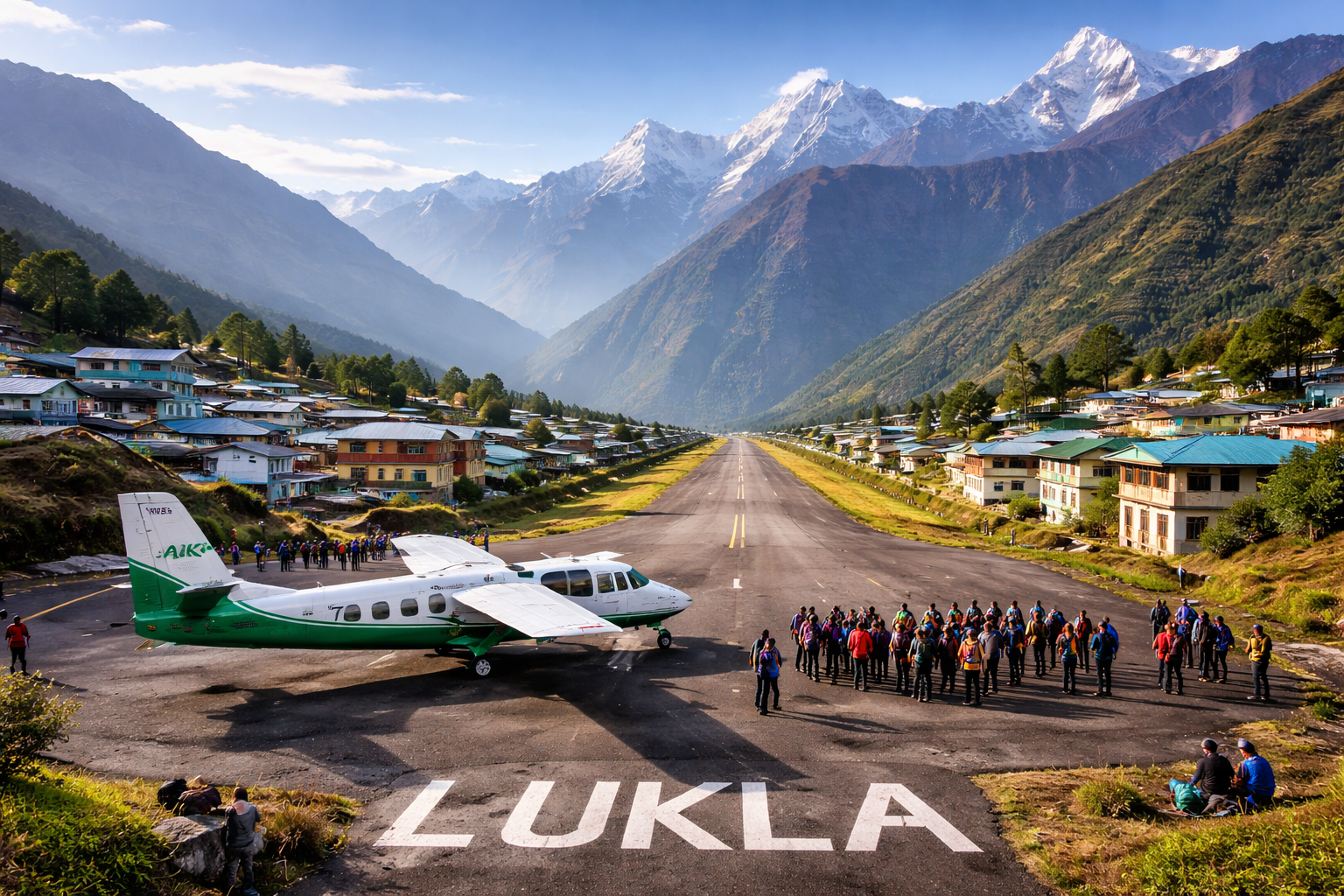
Flying from Kathmandu to Lukla Airport, often called the airport in the Himalayas, is an experience in itself. For beginners, the journey can seem intimidating, but it’s an essential step for anyone aiming to trek to Everest Base Camp.
Why Lukla Airport is Unique
Located at 2,860 meters (9,380 ft.), perched on a mountainside.
Runway length: 527 meters (1,729 ft.), width: 20 meters (65 ft.), slope: 12 degrees.
One end of the runway faces a sheer drop into a valley, the other a steep mountain wall.
No radar or advanced navigation – pilots rely on visual flight rules (VFR).
This combination makes Lukla one of the most thrilling and dangerous airports in the world, yet flights operate daily during the trekking season with strict safety regulations.
Airlines Operating to Lukla
Tara Air: Uses STOL (Short Take-Off and Landing) aircraft like Twin Otter DHC 6/300 and Dornier DO-228. Maximum capacity: 13 passengers per flight.
Summit Air: Formerly Goma Airlines, operates Turbolet LET L-410 UVPE-20, carrying up to 19 passengers.
Sita Air: Offers Dornier DO-228 flights, max 13 passengers.
Flights are often booked weeks in advance, especially during peak trekking seasons.
The Lukla Flight Experience: Beginner’s Guide
For many, the airport in the Himalayas isn’t just a place; it’s the first breathtaking glimpse of the Everest region.
What to Expect:
Early morning departures: To avoid unpredictable afternoon weather.
Scenic views: Snow-capped Himalayan peaks, deep valleys, and terraced farmlands.
Thrill factor: Short runway, steep drop, and rapid ascent create an adrenaline-pumping start to your trek.
Safety Measures
Only experienced pilots with STOL certifications fly to Lukla.
Flights operate under clear sky conditions; cancellations are common when weather deteriorates.
Helicopters are an alternative for emergencies but are expensive.
Weather in Lukla: Planning Your Trek
One of the most important factors for beginners is understanding weather patterns in the Himalayas. Lukla and the Everest region have unpredictable weather that can change in minutes.
Seasonal Overview:
Spring (March–May): Best time for trekking; clear skies, moderate temperatures, rhododendron blooms.
Autumn (September–November): Second-best season; stable weather, crystal-clear mountain views.
Monsoon (June–August): Heavy rainfall, landslides, frequent flight cancellations.
Winter (December–February): Cold temperatures, snow at higher altitudes, fewer trekkers.
Flights to Lukla typically operate in the morning only to take advantage of better visibility. Afternoon flights are often delayed or canceled due to strong winds and cloud cover.
The Reality of the Airport in the Himalayas
Many beginners fear flying to Lukla, but understanding the realities helps ease anxiety.
Runway length is short, but pilots are highly trained.
Weather is the main risk; flights are canceled frequently, but this is part of safe aviation practices.
The view from the flight offers an unforgettable Himalayan panorama.
Pedestrians and local Sherpas sometimes cross the runway; the airport doubles as a community space.
The airport was built with the support of Sir Edmund Hillary and local villagers, not by the government.
From Lukla to Everest Base Camp: Trekking Begins
Once you land at the airport in the Himalayas, the trek officially starts. For beginners, the route offers a gradual acclimatization process with stunning landscapes, vibrant Sherpa villages, and cultural immersion.
Typical Itinerary Overview (12–14 Days):
Lukla to Phakding (2,610 m / 8,563 ft.) – 3–4 hours. Gentle trail along the Dudh Koshi river.
Phakding to Namche Bazaar (3,440 m / 11,286 ft.) – 5–6 hours. First major climb; acclimatization recommended.
Acclimatization day in Namche Bazaar – Hike to Everest View Hotel, explore local markets.
Namche to Tengboche (3,867 m / 12,687 ft.) – 5–6 hours. Stunning monastery and panoramic views.
Tengboche to Dingboche (4,360 m / 14,304 ft.) – 5–6 hours. Scenic trail with terraced fields.
Acclimatization in Dingboche – Hike to Nangkartshang Peak.
Dingboche to Lobuche (4,910 m / 16,109 ft.) – 5–6 hours. Glacial landscapes.
Lobuche to Gorak Shep (5,164 m / 16,942 ft.) – 3–4 hours. Overnight at Gorak Shep.
Everest Base Camp (5,364 m / 17,598 ft.) – 3–4 hours round trip from Gorak Shep.
Return trek – Retrace the route to Lukla over 5–6 days.
Beginner Tips:
Always follow your guide and monitor acclimatization.
Drink plenty of water; altitude sickness is common.
Carry cash; tea houses don’t always accept cards.
Accommodation & Food
Tea houses: Affordable lodges along the trail; prices increase with altitude.
Rooms: Simple, often shared; blankets and mattresses provided.
Food: Dal Bhat (rice and lentils) is staple, supplemented with noodles, soups, and occasional Western dishes.
Electricity & Wi-Fi: Limited; charging stations available for a fee.
Costs & Budgeting for Beginners (2026)
Kathmandu to Lukla flight: $150–$200 one way.
Trekking permits: SNP + TIMS ≈ $50–$60.
Tea house accommodation: $5–$10 per night at lower altitudes, $10–$20 at higher altitudes.
Meals: $5–$10 per meal in tea houses.
Guide & porter (recommended for beginners): $25–$30 per day for guide, $15–$20 per day for porter.
Total estimated budget for Everest Base Camp Trek: $1,200–$1,500 per person for a 12–14 day trek, excluding international airfare.
Safety & Health Tips for Beginners
Acclimatization is key – never rush your ascent.
Altitude sickness prevention – carry Diamox if prescribed; recognize early symptoms.
Travel insurance – must cover high-altitude trekking and helicopter evacuation.
Weather awareness – flights may be delayed; be flexible with your schedule.
Guided treks – recommended for beginners; guides provide safety, local knowledge, and cultural context.
Cultural & Environmental Awareness
Respect local customs: Sherpa hospitality is unmatched.
Minimize plastic waste – carry reusable bottles and bags.
Donate or purchase locally to support communities along the trail.
Conclusion: Why the Airport in the Himalayas is Your Dream Beginning
For first-time trekkers, the airport in the Himalayas isn’t just a technical waypoint—it’s the start of an unforgettable adventure. The Tribhuvan International Airport in Kathmandu introduces you to Nepal’s energy, while Tenzing-Hillary Airport in Lukla offers an adrenaline-packed, scenic gateway to the Everest region.
Every moment—from your first flight to the gradual climb through Sherpa villages—is part of a journey that shapes not just your trek, but your understanding of the Himalayas. In 2026, this adventure remains as thrilling, beautiful, and life-changing as it has ever been.
For beginner trekkers, careful planning, realistic expectations, and respect for local culture make the Everest Base Camp trek a safe, enjoyable, and absolutely unforgettable Himalayan experience.
Table of Contents
