



Need help?
Talk to trip expertGokyo Valley Trek Difficulty: A Deep, Honest & Realistic Guide for High-Altitude Trekker
Updated Guide 2026–2027 | Adventure Walkway Nepal
The Gokyo Valley Trek difficulty is most often described as moderate to challenging, but that single phrase rarely captures what the journey truly feels like. The trek is not a technical climb, nor does it demand ropes or mountaineering skills. Instead, its challenge comes from a combination of high altitude, long walking days, rugged Himalayan terrain, and sustained physical effort over many consecutive days.
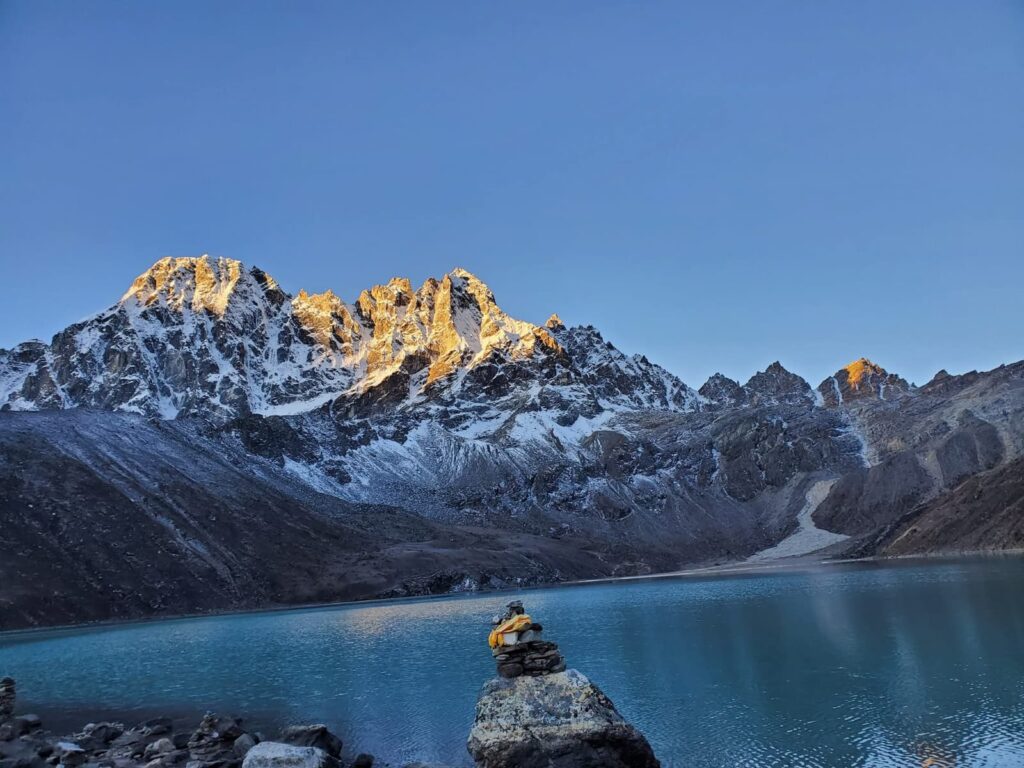
Trekkers spend several nights above 4,000 meters, where the air becomes noticeably thinner and every movement requires more effort than at sea level. The journey gradually leads toward the stunning Gokyo Lakes (4,700–5,000 meters) and culminates with the ascent of Gokyo Ri (5,357 meters)—a viewpoint that delivers one of the most extraordinary mountain panoramas in the Himalayas.
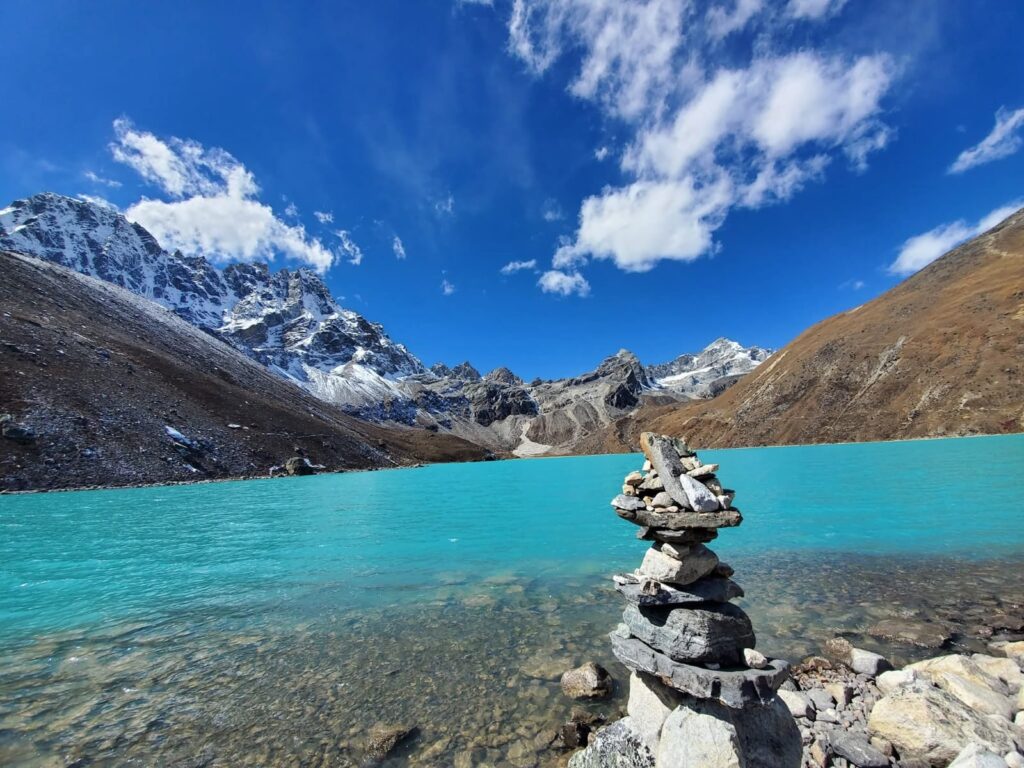
What makes the Gokyo Valley Trek special is that difficulty and beauty rise together. As the trail becomes more demanding, the scenery grows more dramatic: sweeping ridgelines, enormous glacier systems, and a ring of legendary Himalayan giants including Mt. Everest, Lhotse, Cho Oyu, Makalu, and countless unnamed peaks. At the heart of this journey lies the shimmering turquoise Gokyo Lake—often called a true Himalayan jewel—whose calm surface reflects the surrounding peaks like a living mirror.
This guide explores the real difficulty of the Gokyo Valley Trek, explaining what makes it challenging, who it suits best, and how proper preparation transforms it from intimidating to deeply rewarding.
Understanding the True Difficulty Level of the Gokyo Valley Trek
Most experienced trekkers and local trekking agencies classify the Gokyo Lake Trek difficulty level as moderate to challenging. It is more demanding than lower-altitude treks such as Ghorepani or Langtang, yet clearly less extreme than expedition-style routes involving high technical passes above 5,500 meters.
What keeps the trek firmly in the realm of trekking rather than mountaineering is the absence of:
Technical climbing
Fixed ropes
Ice axes or crampon-based movement
Vertical exposure
Instead, the difficulty of the Gokyo Valley Trek in Nepal reflects sustained effort. Long walking days, repeated elevation gains, cold mornings, and thin air combine to test endurance rather than skill.
For trekkers who arrive prepared—physically and mentally—the route becomes demanding but achievable, offering not only breathtaking views but also a strong sense of personal accomplishment and lifelong memories.
Route Overview & Elevation Profile of the Gokyo Valley Trek
The classic Gokyo Valley Trek itinerary begins with a dramatic mountain flight to Lukla (2,860 m). From here, the trail follows the Dudh Koshi River through villages like Phakding before climbing toward Namche Bazaar (3,440 m), the cultural and commercial heart of the Khumbu region.
After Namche, the route gradually leaves the busy Everest Base Camp trail and enters a quieter, more remote section of the valley. Over the next several days, trekkers ascend through settlements such as Dole and Machhermo, where the landscape opens into wide alpine valleys dominated by glaciers and towering peaks.
Most itineraries include at least one or two acclimatization days, which play a critical role in managing Gokyo Valley trek altitude difficulty. These rest days allow the body to adapt gradually to thinner air and significantly reduce the risk of altitude sickness.
The highest point of the trek is Gokyo Ri (5,357 m). This summit day is often considered the most physically demanding part of the entire journey, involving a steep ascent on loose, rocky terrain. The descent back toward Lukla may seem easier in terms of altitude, but tired legs, rocky paths, and long downhill sections require continued care and concentration.
Overall, the elevation profile follows a steady multi-day ascent, a sharp but rewarding summit push, and a controlled descent—each phase bringing its own challenges.
Daily Distance & Walking Hours on the Gokyo Valley Trek
One of the most common questions trekkers ask is about daily walking hours during the Gokyo Valley Trek. Most standard itineraries involve:
5 to 7 hours of walking per day
Distances ranging from 8 to 15 kilometers
Occasional shorter days for acclimatization
On paper, these distances may not seem extreme. However, altitude significantly magnifies effort. Walking uphill at 4,500 meters feels very different from walking the same distance at sea level. Uneven stone steps, gradual ascents, and occasional snow patches slow progress and demand steady pacing.
Trekkers accustomed to fast walking often need to adjust their expectations. Guides frequently repeat a simple but powerful mantra:
“Walk slowly, breathe deeply.”
This rhythm is key to making the Gokyo Trek Nepal both safer and more enjoyable.
Trail Conditions & Terrain on the Gokyo Lake Trek
The Gokyo Valley trail conditions vary significantly throughout the route. Lower sections pass through forests, suspension bridges, and well-maintained village paths. As elevation increases, the trail becomes rougher and more exposed, with:
Loose rock sections
Occasional icy patches
Long glacier crossings, including the Ngozumpa Glacier, one of the largest in Nepal
Crossing the glacier is one of the defining experiences—and challenges—of the trek. The terrain is uneven, with boulders and shifting stones that require careful foot placement. While this is not technical climbing, it demands patience, balance, and focus.
Trekking poles, sturdy boots, and ankle support play a major role in reducing strain and improving safety during this phase of the Gokyo Valley high-altitude trek.
Seasonal Difficulty: Weather & Best Time for Gokyo Valley Trek
Weather conditions strongly influence Gokyo Lake trek difficulty.
Best Seasons (Easier Conditions)
Spring (March–May): Mild temperatures, blooming rhododendrons, stable weather
Autumn (September–November): Clear skies, crisp air, excellent mountain visibility
These seasons offer the most predictable conditions, fewer weather disruptions, and relatively snow-free trails.
Winter Challenges
Winter trekking increases Gokyo Valley trek difficulty significantly:
Extremely cold temperatures
Snow-covered and icy trails
Shorter daylight hours
Limited teahouse availability
While winter offers solitude and dramatic snow-covered landscapes, it is best suited for experienced trekkers with proper gear and cold-weather tolerance.
Altitude, Acclimatization & AMS on the Gokyo Valley Trek
Altitude is the single biggest challenge of the Gokyo Valley Trek.
Trekkers spend several nights above 4,000 meters, where the risk of Acute Mountain Sickness (AMS) increases for everyone—regardless of age or fitness. Symptoms may include headaches, nausea, fatigue, loss of appetite, and disturbed sleep.
Effective acclimatization is essential. A good Gokyo Valley trekking acclimatization plan includes:
Gradual altitude gain
Rest days in Namche and Machhermo
Adequate hydration
Slow, steady pacing
Experienced guides often say:
“You can be strong at sea level and still struggle here. Listening to your body is the most important skill.”
Fitness & Training Requirements for Gokyo Valley Trek
Many trekkers wonder: “How fit do I need to be for the Gokyo Valley Trek?”
You do not need elite athletic ability, but a solid fitness base is important. The ideal trekker can comfortably:
Walk uphill for several hours
Trek multiple days in a row
Carry a light daypack
Recommended preparation includes:
Regular hill walking or hiking
Stair climbing for leg strength
Cardiovascular exercises like cycling or jogging
Light strength training for core and legs
Trekkers who arrive well-prepared generally find the physical challenge manageable and enjoyable, while those without preparation often struggle during the second half of the trek.
Is the Gokyo Valley Trek Suitable for Beginners?
A frequent question is whether the Gokyo Valley Trek for beginners is realistic. The answer is yes—with preparation.
Beginners can successfully complete the trek if they:
Build fitness in advance
Choose a longer itinerary with acclimatization days
Trek with an experienced guide
Maintain realistic expectations
The challenge for first-time trekkers lies not only in fitness, but also in adapting to:
Long trekking days
Simple accommodations
Variable weather
High-altitude living
Age Considerations: Older Trekkers & Gokyo Valley Trek Difficulty
Age alone does not define difficulty. Many trekkers in their 50s, 60s, and even 70s complete the Gokyo Valley Trek successfully.
Key factors include:
Overall health
Joint condition
Cardiovascular fitness
Proper acclimatization
Older trekkers often benefit from:
Slower pacing
Extra rest days
Support from guides and porters
Medical clearance before travel
With thoughtful planning, the Gokyo Valley trek difficulty for older trekkers remains challenging but entirely achievable.
Solo vs Guided Trek: How It Affects Difficulty
Trekking solo increases the mental and logistical difficulty of the Gokyo Valley Trek. Solo trekkers must manage:
Navigation
Weather decisions
Altitude symptoms
Accommodation and flight logistics
Hiring a licensed guide significantly reduces overall difficulty by:
Monitoring health
Adjusting pace and itinerary
Managing emergencies
Providing local knowledge and reassurance
For beginners and first-time visitors, guided trekking is strongly recommended.
Gokyo Valley Trek vs Everest Base Camp: Difficulty Comparison
Both treks are moderate to challenging, but their difficulty differs in nature.
Gokyo Valley Trek: Glacier crossing, quieter trails, steep Gokyo Ri ascent
Everest Base Camp Trek: Longer exposure to altitude, busier trails, Kala Patthar climb
Some trekkers find Gokyo harder due to terrain, while others find it easier due to fewer crowds and a calmer pace.
Gokyo Ri: The Hardest & Most Rewarding Day
The ascent of Gokyo Ri is widely considered the most challenging day of the trek. The steep climb on loose rock at high altitude demands slow, determined effort.
Yet the reward is extraordinary. From the summit, trekkers witness one of the finest panoramic views in the Himalayas—Everest, Lhotse, Makalu, Cho Oyu, and the entire Gokyo Lake system spread out below.
This moment perfectly captures the essence of the Gokyo Valley trek physical challenge: hard effort balanced by unforgettable reward.
Mental Challenges of the Gokyo Valley Trek
Beyond physical demands, the trek requires mental resilience. Repetitive days, cold mornings, simple meals, and occasional discomfort test patience and adaptability.
Many trekkers later reflect that these mental challenges became part of what made the experience meaningful.
Ideal Timeframe for a Comfortable Gokyo Valley Trek
While the trek can be completed in 10 days, most experienced operators recommend 11–14 days. Extra days significantly reduce altitude stress, increase enjoyment, and lower the risk of AMS.
Final Thoughts: Is the Gokyo Valley Trek Difficult?
Yes—the Gokyo Valley Trek is difficult.
But it is a rewarding, achievable, and deeply enriching difficulty.
With preparation, patience, and respect for altitude, it becomes one of the most memorable trekking journeys in Nepal.
Trek with Confidence – Adventure Walkway Nepal
At Adventure Walkway, we provide:
Experienced licensed guides
Flexible itineraries
Proper acclimatization planning
Ethical porter support
Safety-focused trekking experiences
For trekkers who arrive prepared—both physically and mentally—the Gokyo Valley Trek offers turquoise lakes, silent valleys, and Himalayan views that remain etched in memory long after the journey ends.