



Need help?
Talk to trip expertThe Everest Base Camp trek is one of the most famous adventures in the world where thousands of trekkers are lured to the heart of the Himalayas. For beginners, the trip to Everest Base Camp is not just a physical challenge but also a life-changing experience that incorporates natural beauty, vibrant Sherpa culture, and a sense of personal achievement.
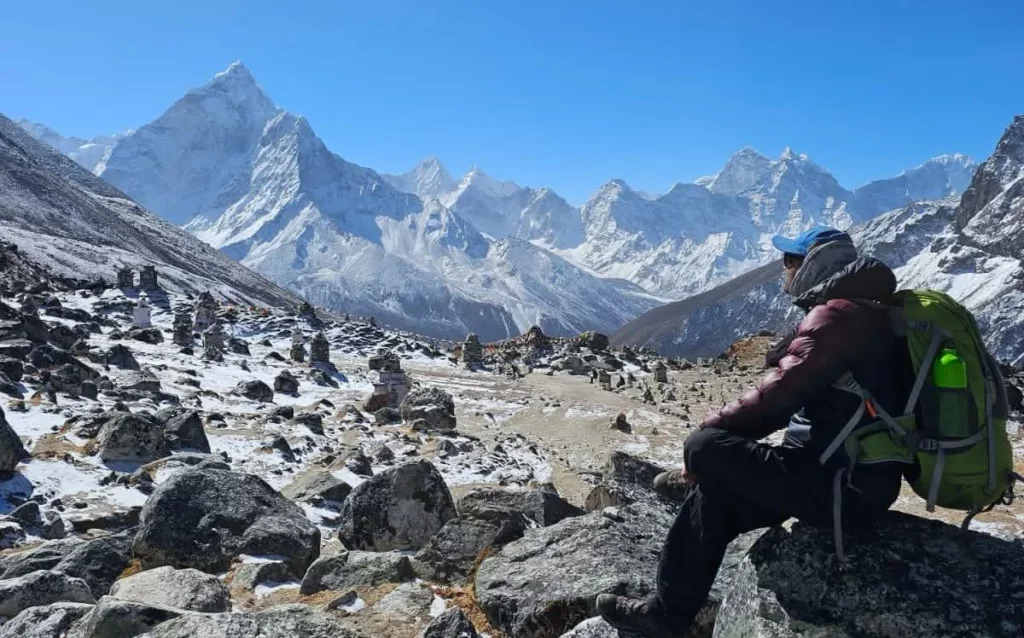
The adventure begins in Lukla with a walk through lush forests and beautiful Sherpa villages until reaching higher alpine meadows with stunning views of the highest mountains in the world. The trek demands hours of walking on rocky and steep trails. So, it is not easy but prior mountaineering experience is not required if trekkers have a good level of fitness.
Physical preparation and training tips
For a successful Everest Base Camp trek, physical preparation is essential for beginner trekkers. The trek requires developing endurance over a long period, leg power, and a stable core to walk the steep terrain for 5 to 8 hours a day with very little oxygen.
Tips for Training
- Start the training at least 3 to 6 months before climbing to help the body for gradual adaptations.
- Take regular hiking trips and gradually increase distance and elevation to get used to with conditions that you will experience during your trek.
- Incorporate cardiovascular activities such as running, cycling, stair climbing, etc. for at least 3 to 5 times per week.
- To strengthen your legs strengthen your legs using squats, lunges, step-ups, and calf raises in the exercise so that your body can comfortably ascend and descend steep slopes.
- Planks, leg lifts, and balance exercises train the core to achieve optimal balance and reduce core fatigue.
- Practice hiking with a deliberate load as you would on a trek, starting with what you feel is reasonable and gradually adding weight over time up to 10-15 kg (22-33 lbs).
- Do some flexibility and mobility work, like yoga or stretching, at least 2-3 times per week to help reduce the risk of injury on your trek.
- If you do not have access to any nearby trails, you can form hill intervals on a treadmill or stair machine.
- To get used to longer hiking, one long hike for 4 to 6 hours every week is essential for your legs to get used to the rigours of longer hiking.
- Consult with your doctor before starting your training program, especially if you have any health concerns.
Acclimatization and altitude sickness prevention
Acclimatization is critical for ensuring a safe trek to Everest Base Camp (5,364 meters) where oxygen levels are very low. Beginner trekkers should take slower initial steps to Everest Base Camp and contain rest days in their itinerary with planned acclimatization stops like Namche Bazaar (3,440m) and Dingboche (4,410m), to allow the body to adjust to varying elevations. Climb high, sleep low is the strategy to increase red blood cell production and oxygen efficiency with the extra oxygen.
Hydration is also important while trekking with a daily target of 4 to 6 litres of fluid is essential. Vegetable soups and herbal teas also help to achieve your fluid goals and fight dehydration. Eating a balanced diet with a carbohydrate base has advantages with energy, whilst at the same time avoiding alcohol and caffeine also helps maintain hydration levels.
Additionally, early signs of Acute Mountain Sickness recognition are important to prevent altitude sickness. If symptoms do not go away, descend immediately and do not go up. Remember to get a doctor’s advice on prophylactic medications such as acetazolamide (Diamox) that may help. Rest days should have some light activity, such as short hikes which promotes acclimatization.
Be mindful of regulating body temperature with layered clothing and UV protection as needed with high-SPF sunscreen and UV-blocking sunglasses. If trekkers slow down, stay hydrated, and implement a sound acclimatization plan, they will experience a memorable and safe journey to Everest Base Camp.

Essential gear checklist
Layered Clothing
Layered clothing is essential in high altitudes where the weather changes frequently. Start with moisture-wicking, base layers, insulated mid-layers, and an outer layer containing a windproof and waterproof jacket to keep the rain and snow off your body. Trekkers should bring quick-dry trekking pants and hiking shorts if trekking seasons include hotter months after May.
Footwear Essentials
Footwear has to be waterproof support ankles are essential, and the trails pass through rocky and uneven trails to avoid possible blisters. Additionally, bring 4 to 5 pairs of moisture-wicking and thermal socks for colder nights.
Headwear and Handwear
A sun hat is essential to protect the face and head from strong sun rays in high altitudes. Trekkers are also recommended to bring a pair of UV-blocking sunglasses to avoid snow blindness and glove liners with a pair of insulated waterproof gloves.
Backpacks and Storage
Trekkers required a daypack with a rain cover and a duffel bag for potters to carry heavy kits. Also, trekkers should bring bags or Ziplocs to keep their electronics, clothing, and sleeping bags away from moisture.
Sleeping gear
A sleeping bag rated to -15°C and a liner is essential to keep yourself warmer. Warm during the night in the unheated teahouses. Renting a sleeping bag in Kathmandu will be beneficial as it will save packing space.
Hydration and Water Purification
Reusable water bottles and hydration bladders suitable for purification tablets or portable filtering technology limit the number of plastic bottles you consume while trekking.
Health and Safety Kit
Bring medical tape, altitude medication, pain reliever, and antibiotics for emergency medication. Remember to bring 50+ SPF sunscreen and lip balm at high altitudes since sun exposure can wreck your face.
Documentation and Extras
Photocopies of your passport, trekking permits, and travel insurance are also essential during the trek. A portable power bank to charge your devices, and some energy bars/nuts can make a great snack, rather than buying one when hiking.
How to choose between guided vs. independent trekking
For the beginner, choosing between guided and independent trekking to Everest Base Camp is one of the most important decisions you will make, because it will influence your whole experience, safety, and enjoyment. For a first-time trekker, we recommend a guided trek that is fully inclusive because while you will be on a sought-after route, your adventure will be well organized by experienced guides who will coordinate all the logistic challenges of the trek, you will not have to navigate, mitigate problems, or read a map. The guides are capable enough to recognize altitude sickness and other medical issues, train in first-aid, and understand evacuations from higher altitudes if needed.
In contrast, independent trekking typically appeals to people who like flexibility, autonomy, and a cheaper option. You can determine your route, your rhythm in terms of pace, and your daily itinerary of rest days. The cheaper costs can be significant, and you can choose your accommodations and planned meals.
Independent trekkers should be well aware of the challenges that can arise from self-navigation, navigating the necessary permits, and arranging logistics, which is exponentially more for inexperienced trekkers. The risk of getting lost especially in bad weather, missing out on experiencing the culture, or facing an emergency without a qualified guide is always higher, especially in remote areas at high altitudes.
In recent years, Nepal has increased regulatory pressures leaning toward requiring all trekkers, regardless of experience to use at least a guide or porter for safety reasons, which may result in fully independent trekking in the Everest region being impossible. Generally speaking, guided treks offer inexperienced trekkers peace of mind, safety, and a richer experience than independent trekking, which is intended for highly experienced high-altitude trekkers with extreme self-reliance.
Mental preparations and managing expectations
Mental preparation is also important for the Everest Base Camp trek, particularly for beginners on their first high-altitude trek. It will take a lot of mental stamina to get through long days of walking in unpredictable weather with basic accommodation at higher elevations. So, it is important to set realistic expectations; teahouse lodges are basic, you may not have hot showers or Wi-Fi, and you will have little comforts of home as we travel above 4200m.
However, if you can accept the circumstances are part of an adventure and focus on the incredible benefits of the trek including beautiful views of the Himalayas, Sherpa hospitality, and the connections you make with fellow trekkers, you will be able to enjoy the trek, even though the discomfort. It is important to have a great mindset through affirmations, visualizing your trek with visual images, and practicing mindfulness as coping strategies while experiencing the normal effects of tiredness, altitude headache, or self-doubt.
If you mentally prepare yourself, research the trek, and understand the challenges and beauty of the experience, you will feel confident and strong on the expedition to Everest Base Camp. It should be much more enjoyable, and you’ll be more likely to complete the trek.
Conclusion
The trek to Everest Base Camp is a rewarding journey that requires preparation, patience, and perseverance. With the right focus on physical training, prioritizing acclimatization, ensuring the proper gear is packed, and choosing a guided trek for additional safety, beginners can fulfill the challenges posed by high-altitude trekking.
In addition to the physical preparation and gear, it’s important to focus on mental resilience and keeping realistic expectations – reframing teahouse living as simplicity, looking for moments of celebration, and becoming comfortable with a lack of plan or structure for a few days if weather or health don’t cooperate. The outcome of the trek toward Base Camp is not only the body conquering a high altitude challenge but also an experience to become a lifetime memory of the beauty of the Himalayas, a rich culture, and the actions of personal growth.