


Need help?
Talk to trip expertWhy Manaslu Circuit Trek Is Not for Everyone
Why Manaslu Circuit Trek Is Not for Everyone is a question many travelers ask before attempting this Himalayan journey. Unlike the popular Annapurna or Everest treks, Manaslu is remote, raw, and quietly demanding. It tests both mental and physical endurance. From the long drives to the high-altitude passes, it does not adapt to expectations or comfort. This travel journal explains the real experience along the 16-day itinerary and why this trek is not for everyone.
Day 03: Drive to Soti Khola
The journey begins with a long drive from Kathmandu to Soti Khola. Unlike the smooth roads of Pokhara or tourist hubs, this drive is bumpy, dusty, and full of hairpin turns. Landslide-prone areas and narrow bridges make the trip slow, and you quickly realize that Manaslu does not give you a soft landing.
Villages appear briefly, then vanish, leaving a sense of isolation. The physical fatigue from hours in a bus is immediate, but the mental preparation starts here. Many travelers feel excitement; some begin questioning their decision. This early filtering is subtle but effective.
Day 04: Trek to Machha Khola
The trek officially begins along the Budhi Gandaki River. The trail is relatively gentle, winding through forests and small fields. The air is breathable, and your legs are still fresh, but the rhythm of walking for hours begins to set in.
Teahouses in Machha Khola are basic. Rooms are small, beds are thin, and blankets are minimal. Hot showers exist only if fuel is available. This is your first real taste of Manaslu’s honest simplicity—comfort is a luxury, not a guarantee.
Day 05: Trek to Jagat
As the trail narrows and climbs, the environment changes. Forests thicken, rivers roar, and suspension bridges remind you how exposed this region can be.
Jagat is a small village with few teahouses. Electricity is intermittent, toilets are shared, and meals remain simple. The trek is not about dramatic peaks today but consistent effort. Even small discomforts begin to accumulate, showing why Manaslu is not forgiving.
Day 06: Trek to Deng
The path becomes steeper. Terraces and farmland appear, but the footing is uneven. River crossings and stone steps require careful attention.
Deng is slightly larger than Jagat but remains modest. Nights are cold, walls thin, and privacy limited. You start to notice the mental aspect of the trek: patience, persistence, and adaptability are as important as physical fitness.
Day 07: Trek to Namrung
Namrung is perched higher, introducing subtle effects of altitude. Sleep becomes lighter, appetite decreases, and breathing feels shallow at times.
The village showcases Tibetan culture: small monasteries, prayer flags, and stone walls. Even with cultural richness, teahouses remain basic, reminding you that Manaslu prioritizes survival over luxury. Travelers expecting modern amenities begin to understand why this trek is not for everyone.
Day 08: Trek to Lho
The trail steepens and the terrain becomes more rugged. Rocky paths, narrow trails, and occasional loose gravel keep your focus sharp.
Lho has more teahouses and a small monastery. Nights are still cold, showers are limited, and electricity is sporadic. The trek’s rhythm—walk, climb, descend, repeat—becomes physically and mentally taxing. This is where Manaslu quietly tests your endurance and commitment.
Day 09: Trek to Samagaon
Samagaon sits near 3,500 meters. The altitude becomes noticeable in subtle ways: slower pace, lighter meals, and restless sleep.
The village is small, quiet, and authentic. Silence is a key feature here; phone signals fade, and tourists are few. For some, this solitude is peaceful. For others, it is mentally challenging. The trek begins to separate travelers who are ready for isolation from those who are not.
Day 10: Rest Day in Samagaon
Rest days are for acclimatization, short hikes, and observation. Walking short loops helps your body adjust to the altitude. Visiting monasteries and interacting with locals gives insight into the region’s Tibetan culture.
This day highlights why Manaslu is mentally demanding. It teaches patience, awareness, and self-reflection. For some trekkers, sitting quietly with their thoughts is harder than any physical climb.
Day 11: Trek to Samdo
The path to Samdo becomes treeless and exposed. Winds intensify, gravel paths challenge footing, and small streams must be crossed.
Altitude effects are more pronounced: shallow breathing, quicker fatigue, and light-headedness at times. This stage filters out those unprepared for sustained high-altitude trekking. Focus, awareness, and pacing are essential to continue safely.
Day 12: Trek to Dharamsala
The trek continues through rugged terrain. Dharamsala is small but strategically located as the final stop before the high pass. Accommodation remains basic, yet this is the last opportunity to rest before the most challenging section.
At this point, travelers understand why Manaslu does not cater to comfort. Every step, meal, and night teaches humility and endurance.
Day 13: Trek to Larkya La Pass and Bimthang
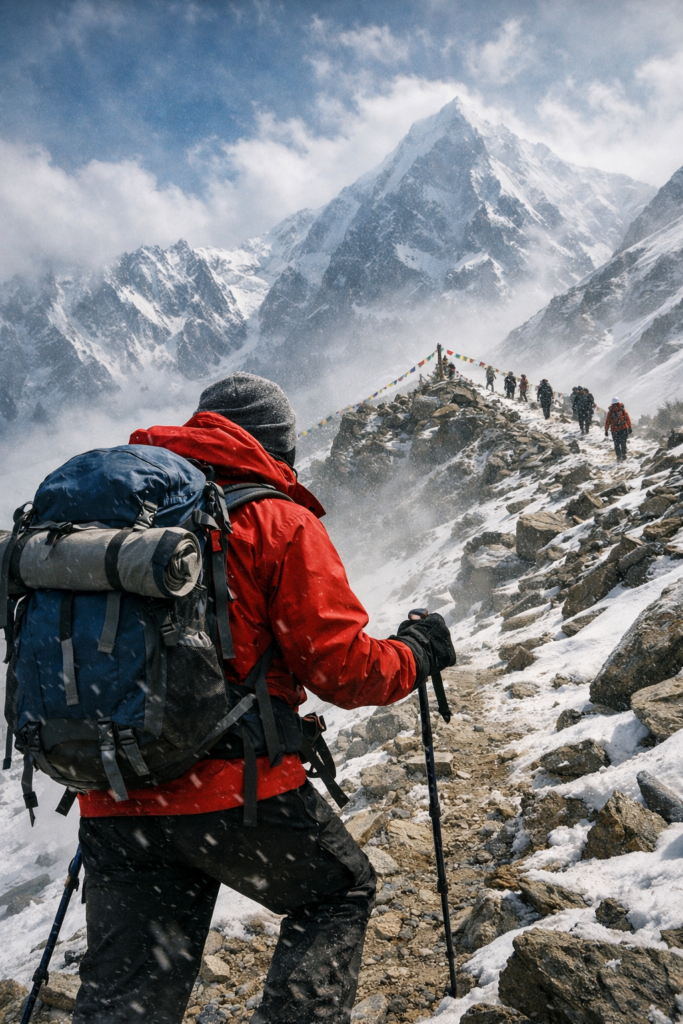
The trek’s highlight is crossing Larkya La Pass at 5,160 meters. The ascent is steep and physically demanding. Icy patches, high winds, and altitude slow progress.
Reaching the pass is a breathtaking reward. Yet, there is no massive celebration or signage—Manaslu is about the journey, not a single “wow” moment. The descent leads to Bimthang, where trekkers rest and recover.
This day emphasizes why Manaslu is not for everyone: physical endurance, altitude tolerance, and mental focus are all required simultaneously.
Day 14: Bimthang to Dharapani
The descent continues through forests and river valleys. Trails become less steep but fatigue from previous days is evident in every step.
Dharapani is a small town with slightly better amenities. Meals are simple, beds are thin, and nights are still cold. Even in descent, the trek continues to test patience and perseverance.
Day 15: Drive to Besisahar from Dharapani
After days of trekking, the drive back to Besisahar is a relief. Roads are still bumpy, dusty, and slow, reminding you that Manaslu begins testing you before the trail even starts. Travelers reflect on their journey and the cumulative impact of 12+ days of trekking.
Day 16: Drive Back to Kathmandu
Returning to Kathmandu, the contrast between the city and Manaslu is stark. Comfort, connectivity, and convenience flood back. Yet, the memory of remote villages, challenging trails, and high passes lingers.
Travelers often realize that this trek is not about luxury or convenience—it is about experience, resilience, and awareness.
Why Manaslu Circuit Trek Is Not for Everyone
Manaslu quietly filters out those unprepared. It is not suitable for:
Comfort-dependent travelers
First-time multi-day trekkers
People sensitive to high altitude
Those needing constant connectivity
Anyone unwilling to prepare physically and mentally
The trek is not “harder” in dramatic ways—it is less forgiving. Daily walks, uneven terrain, altitude, and minimal amenities accumulate to test body, mind, and patience.
Final Thoughts
Why Manaslu Circuit Trek Is Not for Everyone is not a warning—it is an honest reality. The trek remains authentic because it is raw, quiet, and demanding.
Completing it brings more than memories of peaks or villages. It brings resilience, awareness, and humility.
Choosing Manaslu means choosing to meet the mountains on their terms, respecting their challenges, and embracing the journey fully. For those ready, it becomes one of the most meaningful treks imaginable.
Table of Contents
