


Chitwan Jungle Safari
13 reviews in Tripadvisor


Duration
4 Days
Group Size
2-20 People
Difficulty
Easy
Max. Altitude
150m. / 492ft.
Meals
Breakfast, Lunch and Dinner
Accommodation
Resort
Transportation
Private Vehicle
Dipendra Dhakal
+977-9851093471 (Whatsapp)Meet Mr. Dipendra Dhakal, a pioneer of Nepal tourism, who began his career as a trekking guide and has extensive experience in tour management and itinerary planning.
Introduction of Chitwan Jungle Safari
Chitwan is a popular wildlife destination in southern Nepal, known for its forests, grasslands, wetlands, rivers, and diverse wildlife. Chitwan Jungle Safari is a chance to experience this natural habitat as well as gain insight into the surrounding area and the Tharu community of Chitwan National Park.
It starts with a road trip from Kathmandu to Chitwan and then a walk along the Tharu village upon arrival. The village experience allows visitors to immerse themselves in local life, customs, and houses around the park. It enhances the journey on the wildlife side with a cultural touch.
Most of the activities are carried out in and around Chitwan National Park. Chitwan jungle safari tour includes jeep safari, canoe, jungle walks, bird watching and visiting the wildlife-related sites. The activities offer different opportunities to experience the forests, rivers, wetlands and wildlife of the area.
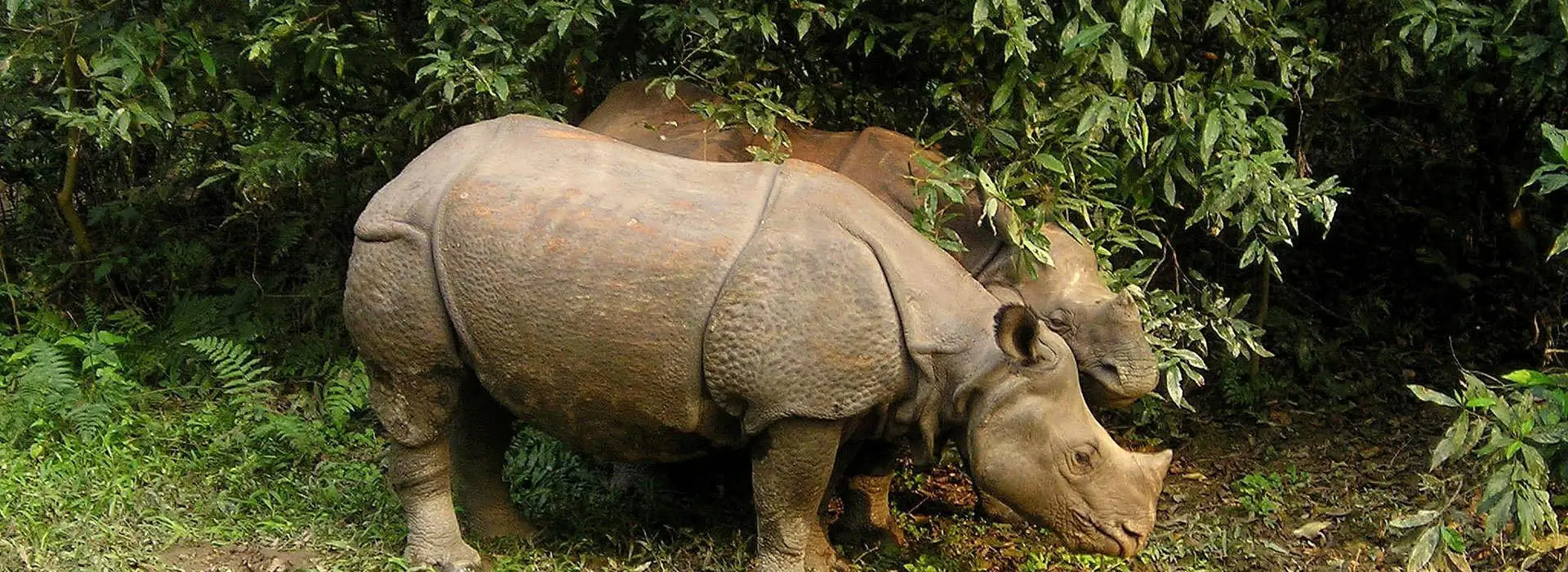
The one-horned rhino is a special feature of this park. Rarely, deer, wild boar, monkeys, crocodiles and various types of birds can also be seen, depending on the season and weather. Chitwan is also the home of larger animals like Bengal tigers, leopards, sloth bears, gaur, and wild elephants that may or may not be spotted.
Another highlight would be the Rapti River. You can also take a calm ride in a canoe, which can offer you a more relaxed view of the river ecosystem and potentially see crocodiles, water birds, and other wildlife along the riverbanks. During the appropriate migratory seasons, Bis Hazari Lake is also a good place to watch wetland species.
There is also a visit to the elephant breeding centre and the selection of safari activities. Depending on the current day and operations, travelers have the option of hiring an extra jeep safari or a canoe trip. These activities build on one another in that they will involve different environments and wildlife habitats.
In the higher areas of Nepal, it is colder, and except at the top of the tour, Chitwan is a warm region; therefore, comfortable clothing, sun protection, insect repellent, and ample drinking water are required throughout the tour. Guides are always required for wildlife activities, and visitors are expected to adhere to park rules; please keep a distance from all wildlife.
This Chitwan National Park safari is for those who do not want to undertake a few-day trek but still wish to see animals and explore the culture. Adventure Walkway has the package arrangements for transportation, accommodation, programmed activities, and travel support, and you just have to enjoy the Chitwan area and the other communities.
What makes Chitwan Jungle Safari Special
The Chitwan Jungle Safari is an exceptional activity, as it is a very short trip to explore wildlife, river activities, birds, and local culture. The one-horned rhinoceros, crocodiles, deer, wild boar, monkeys, and many other species of birds are found in Chitwan National Park. The park is also home to tigers, leopards, sloth bears, gaur and wild elephants, which are not always seen.
For those who are interested in the jungle, a Chitwan jungle safari tour offers a number of opportunities for exploring the area. There are jeep safaris that go through forest and grassland, and a canoe ride to get a more relaxed experience of the Rapti River and wildlife. Bis Hazari Lake is another spot for nature lovers to enjoy birdwatching.
The tour also features a visit to a Tharu village, where guests can experience their culture and way of life. It’s a good mix for those who want to see wildlife as well as experience the culture and don’t have a long hiking trail in mind.
Quick Tour Facts
| Tour Fact | Details |
| Tour Name | Chitwan Jungle Safari |
| Duration | 4 Days |
| Destination | Chitwan, Nepal |
| Main Attraction | Chitwan National Park |
| Starting Point | Kathmandu |
| Ending Point | Kathmandu |
| Accommodation | Hotel, Lodge, or Resort |
| Transportation | Private Road Transportation |
| Main Activities | Jeep Safari, Canoe Ride, Jungle Walk, Birdwatching |
| Cultural Experience | Tharu Village Walk |
| Wildlife | Rhinoceros, Deer, Crocodiles, Monkeys, Birds and More |
| Best Season | October to March |
| Meals | Breakfast, Lunch and Dinner as per Itinerary |
| Difficulty | Easy |
| Suitable For | Families, Couples, Solo Travelers and Groups |
| Highest Elevation | Approximately 815 m (2,674 ft) |
| Guide | Experienced Local Guide |
| Permit | Chitwan National Park Entry Permit |
| Major River | Rapti River |
| Special Experience | Bis Hazari Lake Birdwatching |
Highlights of Chitwan Jungle Safari
- Wildlife safari in Chitwan National Park
- Go on a Jeep safari in forest and grassland areas.
- A ride down the Rapti River on a canoe.
- Birdwatching at Bis Hazari Lake
- A chance to view the one-horned rhino and other animals.
- The walk and culture of the Tharu community are excellent activities.
- Visit to the Elephant Breeding Centre
- Bush-walking tour: jungle walk with trained local guide
- Option to stay in the jeep safari or canoe ride
- Comfortable road journey between Kathmandu and Chitwan
Itinerary of Chitwan Jungle Safari
Qing will depart Kathmandu in the morning for Sauraha by private car to Chitwan. This trip takes about 5-6 hours and is about 170 km. The approximate duration is 5-6 hours and the distance is about 170 km. From the Kathmandu Valley, the road meanders its way to the warmer Inner Terai, passing through the various landscapes and rural communities.
We will arrive at Sauraha, where we will be registered at the resort and lunch will be provided. Sometime will be available to rest after the drive before beginning the afternoon activities.
We will then have a brief stroll around a nearby Tharu village. This allows the opportunity to glimpse old houses and understand the local lifestyle. We will once again be at the resort in the evening for a Tharu cultural program before dinner. The Chitwan region is famous for Tharu cultural activities, which are an everyday experience in the region.

Activity: Drive and Tharu Village Walk, 5 to 6 hours

Max. Altitude: 1350m./4,429ft. (Kathmandu)

Meal: Lunch and Dinner

Accommodation: Resort
At the beginning, we’ll have a full day in Chitwan National Park. This tour features an outing on the canoe, jungle adventures, a jeep safari and visits to the crocodile and elephant breeding centers. The activities offer additional opportunities to experience the park’s forests, rivers, wetlands and wildlife.
Afterwards, you take a canoe ride on the Rapti River, where you are likely to spot gharials, marsh crocodiles, water birds and other riverside wildlife. Typically, the canoe ride takes one and a half to two hours. Then, we will embark on a guided jungle walk and jeep safari around the park.
The Elephant Breeding Centre is also included in today’s program. Here you can find out about elephant care and breeding. Chitwan National Park has a wide range of mammals, reptiles and bird species such as the one-horned rhino and several species of crocodiles.
In the evening, we will head back to the resort for dinner and a night’s sleep.
Activity: Canoe Ride, Jeep Safari, Jungle Walk and Breeding Centre Visits, 6 to 8 hours
Max. Altitude: 815m./2,674ft. (Chitwan National Park)
Meal: Breakfast, Lunch and Dinner
Accommodation: Resort
The morning will start with a birdwatching visit to Bis Hazari Lake (Twenty Thousand Lake). The wetland is in the Chitwan area and is a significant habitat for resident and migratory birds. Birds are active during the early morning; this is a good time to birdwatch.
After returning to the resort, we will have breakfast and take some time to rest. Later, you may choose to take part in another jeep safari or a canoe ride. You can either choose the activity you enjoyed the most or re-attempt to see if you can find any animals that you didn’t see the day before.
The afternoon activity continues until late afternoon. A jeep safari also offers a chance to explore the forest and grasslands; a canoe ride is another chance to see river habitats and aquatic wildlife. We’ll be heading back to the resort in the evening for dinner and will spend our last evening in Chitwan.
Activity: Birdwatching and Choice of Jeep Safari or Canoe Ride, 6 to 8 hours
Max. Altitude: 815m./2,674ft. (Chitwan National Park)
Meal: Breakfast, Lunch and Dinner
Accommodation: Resort
Following breakfast, we’ll be packing up and heading back to Kathmandu. The return trip is about 170 km and will take about 5-6 hours, depending on road and traffic conditions. This trek is situated outside the lowland habitat of the Chitwan area and on the way back to the Kathmandu Valley.
No jungle program is scheduled today, so you can relax before the trip. This will be done by private vehicle with appropriate stops made where necessary.
Arrival in Kathmandu is expected in the late afternoon/evening. Upon arrival, our team will pick you up from your hotel or any mutually agreed place in the city, which is the end of the tour in Chitwan.
Activity: Drive back to Kathmandu, 5 to 6 hours
Max. Altitude: 1350m./4,429ft. (Kathmandu)
Meal: Breakfast
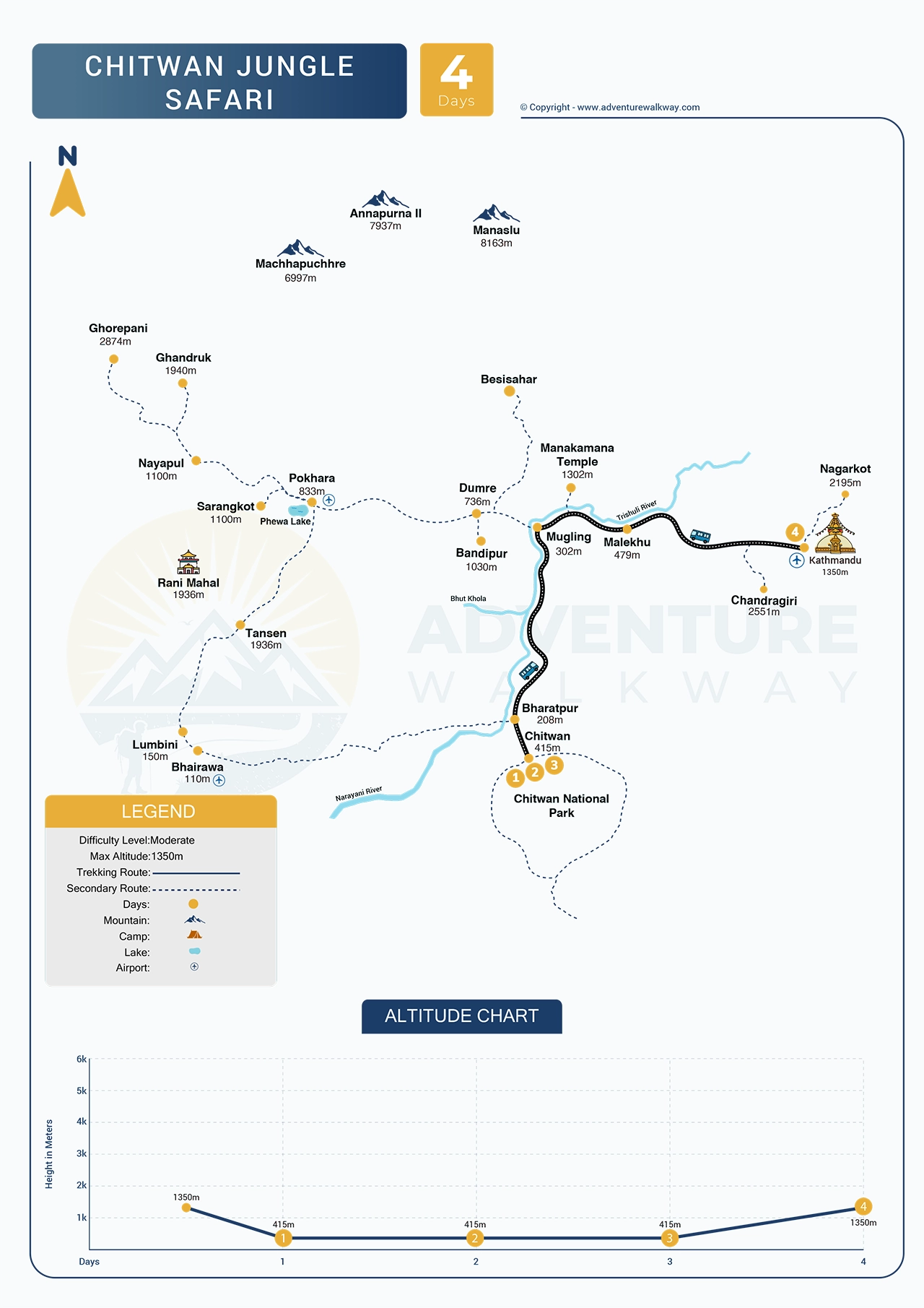
Route Map of Chitwan Jungle Safari
Trip Information
Accommodation
In general, the Chitwan Jungle Safari is provided in a hotel, lodge, or resort in the vicinity of Sauraha. The proximity of this area to the national park, safari activity points, restaurants, and the Rapti River makes it the ideal location.
Typically, rooms have a nice bed, a private bathroom, electric power, and a few facilities for guests. Depending on the property, there are also restaurants, gardens, outdoor seating areas and other leisure facilities.
On this Chitwan jungle safari tour, Adventure Walkway arranges accommodation based on the package category and availability. This isn’t a remote jungle camp, but tourist-standard lodging is available for guests.
Agencies will be grateful if they are warned of any special room requirements. The accommodation needs of families, couples and single travelers can vary.
Food and Drinks
The meals served during the Chitwan National Park safari are typically at the hotel or resort. They can be either Nepali, Indian, continental, and other familiar foods. Breakfast, lunch, and dinner are planned based on the programme and programme activities.
During their stay, travelers can also try local Tharu food and Tharu traditional dishes. In tourist areas, there are staples like rice, vegetables, lentils, noodles, eggs, meat and soups.
Vegetarian options are readily available, and travelers who have allergies or special dietary needs should contact Adventure Walkway before the trip.
Hotels, restaurants and shops have drinking water. It is a good idea to use a reusable bottle while on safari, particularly in the summer months.
Weather and Best Season
The weather in Chitwan is warm subtropical and can have a significant impact on outdoor activities. October to March is a good time to visit Nepal, and the period between April and June tends to be hot. July to September is the rainy season in Nepal.
| Season | Months | Typical Conditions | Suitability |
| Autumn | October to November | Warm days and generally pleasant weather | Excellent |
| Winter | December to February | Cooler mornings and comfortable daytime temperatures | Excellent |
| Spring | March to May | Increasingly warm, with hotter afternoons | Good |
| Monsoon | June to September | Frequent rain and humid conditions | Less suitable |
Chitwan jungle safari tours are hosted all year round, although the early morning rides might be easier in the warmer months. During the monsoon, rain might also affect some outdoor activities.
Transportation
You are mostly transported to the Chitwan area by road from Kathmandu for the Chitwan Jungle Safari. Your trip accommodates you in a private car, affording the group the flexibility of stops and travel together.
According to the Nepal Tourism Board, the distance from Kathmandu to the Chitwan National Park headquarters at Kasara is about 146 km by road. The distance to the accommodation varies depending on the location.
Activities like jeep safaris and transfers from the accommodation to the activity location are done by local transportation. Safari vehicles take designated routes and abide by park regulations.
Also included in this package is transportation planned by Adventure Walkway. On extended road trips, travelers need to have all essentials, water, and medication on hand and have all forms of travel documentation readily available.
Internet and WiFi
In Sauraha’s main tourist areas, Internet and WiFi are usually provided at hotels, resorts, restaurants and cafes. The connection quality may change depending on the accommodation, infrastructure, weather and network traffic.
Access to the internet is not guaranteed on Chitwan National Park safaris, especially when visiting forest areas and during outdoor activities. The jeep safari, canoe ride or jungle walk is primarily a wildlife observation experience.
Before leaving your hotel, it would be beneficial to print out key travel information, maps, contact details and so forth.
The best time to use WiFi is in the morning and evening when you return to the accommodation. If you’re someone who requires regular Internet access, then mobile data should not be overlooked either.
Mobile Network and SIM Card
There is generally mobile network coverage in populated areas, including Sauraha, around Chitwan. The signal may be weaker indoors, in wooded areas, and during certain outdoor pursuits, however.
A local SIM card or eSIM can prove beneficial for making calls, accessing mobile data, navigating and communicating while on the Chitwan jungle safari tour. The popular mobile networks in Nepal include Nepal Telecom and Ncell.
It is better to programme your SIM/eSIM card before you go into a place where you may have weak signals. Save and keep important telephone numbers.
In the Chitwan Jungle Safari, mobile coverage is not 100% in the national park. Signal levels may vary depending on precise location and local network conditions.
Gadget Charging Facilities
During the Chitwan National Park safari, most of the hotels and resorts offer electricity and charging points in their guest rooms. Sockets may be different numbers and/or different locations among properties.
Electrical socket types vary from country to country; international travelers should bring an appropriate travel adapter. A power bank can also come in handy for extended safari journeys, bird watching and canoeing.
The use of phones and cameras can be a large drain on battery life during wildlife activities. It is advisable to charge all devices before an extended day of activities.
A useful power bank to provide backup power when outside your accommodation. Be sure to carry charging cables with you in your daypack so they are easily accessible.
Drinking Water
During Chitwan Jungle Safari, it is crucial to have safe drinking water as it can get hot in Chitwan during the day. The availability of bottled water is very common in tourist facilities, shops, and hotels.
Don’t drink untreated water from rivers, ponds, or other natural water sources. Those who want to avoid generating plastic waste could bring their own bottle and drink from it, filling it up with treated or filtered water.
Take sufficient water for extended out-of-door play. During a jeep safari, canoe ride, or jeep and canoe combination, one can spend a few hours away from accommodation.
In a Chitwan jungle safari tour, it is more crucial to stay hydrated throughout the day, especially in the warmer seasons. A reusable bottle also helps to keep passing water throughout the day.
Money and ATMs
Nepalese rupees are the main currency used in Chitwan. Cards may be accepted at hotels, restaurants, and larger establishments in tourist zones, while cash will be helpful for smaller transactions and for local services.
ATMs are available around the main tourist areas, but travelers should not assume that they will always be able to find an ATM. It is useful to have some Nepalese rupees with you before going to the Chitwan National Park safari.
Useful cash for snacks, drinks, souvenirs, small purchases, and optional activities. Keep your money and cards safely stored when participating in outdoor activities.
Foreign currency should be changed only in the authorized banks or money exchange units. Also, it’s wise to keep some cash outside the wallet as well.
Health and Safety
The Chitwan Jungle Safari is conducted in a natural wildlife environment, and it’s important to follow the instructions of your guide. Never go too near wild animals.
For all jungle activities, follow the guide’s directions.
- Never feed or touch wild animals or approach them.
- Apply insect repellent and sunscreen when outdoors.
- Take adequate quantities of safe water, particularly during hot periods.
- Find a pair of comfortable shoes for jungle walking.
- Have emergency and personal medicines available.
Visitors should also avoid disturbing animals when they are on a tour organized in the jungle of Chitwan. Please let the agency know if you have a medical condition, allergy, or specific dietary requirement before travel, so they can make suitable arrangements.
What to Pack
For Chitwan National Park Safari, it is possible to wear lightweight and comfortable clothes for most of the year. Colours that are neutral are suitable for wildlife activities such as beige, brown, green or grey.
Bring comfortable walking shoes, sunscreen, insect repellent, sunglasses, a hat, a light jacket and a water bottle. It can be helpful on cold winter mornings and evenings to wear a jacket.
Another helpful feature to look for in a daypack is a phone, camera, charging cable, power bank, personal medication, and travel documents. Binoculars are especially helpful to those who enjoy watching birds.
Avoid taking unessential valuables on outdoor activities while chitwan jungle safari. Ensure valuables are not damaged by dust, rain, or sudden movement when being transported on a jeep or canoe.
Chitwan National Park Entry and Permits
Entry into the areas of the jungle safari in Chitwan National Park must be accompanied by the appropriate entry permit. The national park entry fee covers no specific activities or facilities. Nepal Tourism Board also has a separate entry fee for the Elephant Breeding Centre.
Fees may be subject to change; travelers should check for the most up-to-date pricing before travelling.
As for the Chitwan National Park safari, it takes care of the necessary arrangements, which are part of the package at Adventure Walkway. Any extra door entry fee or extra activity will be verified before taking part.
Wildlife You May See in Chitwan
You will have a chance to see mammals, reptiles, and birds in various natural habitats during the Chitwan Jungle Safari. According to the records of the Nepal Tourism Board, Chitwan National Park has 56 mammal species and 49 amphibian/reptile species.
The one-horned rhinoceros is a big attraction of the wildlife, and one can also see deer, wild boar, rhesus monkeys, langurs, crocodiles, and a variety of bird species.
Chitwan also has Royal Bengal tigers, Leopards, gaur, wild elephants, sloth bears, and other wildlife, although it’s never certain.
The animals are only visible during the Chitwan jungle safari tour, depending on the season, weather, time of day, animal activity, and luck. A guide is also of assistance in locating animal tracks, animal calls, nests, and other indications of wildlife.
What to Expect on a Jeep Safari
A jeep safari is a type of vehicle that can be used to travel through the forest and other areas where it is permitted, as well as to see wildlife, but it is not allowed to do a walking safari. The Chitwan National Park safari is guided, and the animals, birds, tracks, and other signs are identified by the guide.
- Do not move from your seat until you are permitted to do so by your guide.
- Speak quietly when around animals.
- Never feed or call animals.
- Do as the safari route says.
- Lock cameras or phones in the car.
- Pay attention to the instructions for safety given by the guide.
Rhinos, deer, monkeys, wild boar, crocodiles and birds may be observed while traveling through a jeep safari. Predators are more difficult to find if they are larger.
Patience is key in the Chitwan Jungle Safari as animals move about in their natural habitat.
Canoe Ride on the Rapti River
The canoe ride is a more restful experience of the Chitwan jungle safari tour and offers a different perspective of the river environment. In suitable water conditions and with local arrangements, canoes travel along suitable stretches of the Rapti River.
Wetlands and the river foster water birds and reptiles. It is a nature lover’s paradise, where one can find marsh mugger crocodiles, along with the endangered gharial, depending on location and wildlife activity, of course.
The boatman will give instructions to the passengers, and they should keep sitting and obey. Care needs to be taken to avoid sudden movements or unnecessary noise.
A canoe ride is a good addition to jeep safaris in Chitwan National Park as one gets to see a different habitat. This activity can also be done comfortably in the early morning.
Jeep Safari or Canoe Ride: Which Should You Choose?
Both activities are an alternative opportunity to experience the natural environment of Chitwan. It may be based on the size of the area you want to cover, or how much time you wish to spend at the river.
| Feature | Jeep Safari | Canoe Ride |
| Main Environment | Forest, grassland and wildlife routes | River and wetland areas |
| Wildlife Focus | Mammals, birds and reptiles | Water birds and reptiles |
| Activity Style | Vehicle-based exploration | Quiet river experience |
| Best For | Covering more ground | Observing river habitats |
| Photography | Useful for distant animals | Good for birds and river wildlife |
| Movement | Covers larger areas | Follows a river section |
A jeep safari is better suited for the pursuit of large animals. If you’re interested in birds, crocodiles, and a slower pace, then you should try out a canoe ride.
Both are helpful components in the Chitwan Jungle Safari as they explore different surroundings.
Birdwatching at Bis Hazari Lake
Near Chitwan, Bis Hazari Lake, or Beeshazari Lake, is a wetland that is home to a variety of bird species. Chitwan is regarded as one of the major birdwatching hotspots in Nepal, with over 500 species recorded, according to the Nepal Tourism Board.
One day on the Chitwan National Park safari trip will also include a birding session at Bis Hazari Lake, where one can spot water birds and other species that are available in the season.
Birds that may be seen include wetland birds such as ducks, herons, egrets, and storks, as well as kingfishers. Migratory species are easier to see during seasons that are appropriate for their migration. If interested in identifying distant birds, bring binoculars. It may also be useful to have a zoom lens camera.
The early morning is a good time for birding on the Chitwan jungle safari tour as the weather is more pleasant and birds can be more active.
Tharu Village Walk and Local Culture
The Tharu village walk is a cultural walk done in the Chitwan jungle safari. The Tharu people have an old tradition in the Terai region, and their traditional lifestyle is highly dependent on the local environment and agriculture.
You can be able to see the traditional houses, the village paths, the farming areas, and examples of local architecture. You will also have the chance to explore traditional food, music, craft, and life within the community visited.
Walking respectfully is key. Please do not take pictures of local people or in private areas without permission, and please take the advice of your local guide.
The Chitwan National Park safari is not all about viewing wildlife. A village visit offers the opportunity to learn about the communities surrounding the park and the relationship between these communities and the surrounding landscape.
Elephant Breeding Centre Visit
The Elephant Breeding Centre is a separate educational visit which is included in the Chitwan jungle safari tour. It offers a chance to learn about elephants’ breeding, care, and management and to see elephants in the facility.
It’s situated at Khorsor, close to Sauraha. Nepal Tourism Board mentions an entrance fee for the Chitwan Elephant Breeding Camp. Visitors are required to abide by the rules of the centre and keep their distance from the elephants. Avoid feeding or approaching the animals unless directed to do so by staff.
The visit provides a different perspective from observing wildlife in the forest. It can inform travelers about managed breeding and animal care facilities. The center is visited as part of the Chitwan National Park safari, and it does not replace the natural viewing of the wildlife.
Jungle Walk and Wildlife Safety
A jungle walk offers a more intimate view of the forest than being in a vehicle. A guide may lead a jungle safari where he/she can identify animal tracks, plants, insects, and birds, along with other marks that might otherwise be overlooked.
- Follow the guide on the walk.
- Keep a safe distance from wildlife.
- Never approach or feed animals.
- Avoid loud noises.
- Walk on the designated walking route.
- Avoid picking plants and disturbing nests.
- Comfortable closed shoes, insect repellent, sunscreen, and drinking water are useful during the walk.
The Chitwan jungle safari tour is a genuine jungle safari experience, so it is important that visitors always take advice from their guide and don’t try to get closer to the animals for greater photo opportunities.
Photography and Camera Tips
Wildlife photography is a very patient affair, and a good way to enjoy the Chitwan National Park safari is by taking photographs. A camera with a useful zoom range is beneficial, as animals may be concealed in the tall grass or in the woods.
- Bring a camera or cell phone with a good battery charge.
- Take a power bank for extended periods.
- Do not go close to animals; use a zoom lens instead.
- Cover and protect cameras from dust and rain.
- Bring binoculars for seeing animals and birds from afar.
- When taking pictures of animals, adhere to your guide’s directions.
Avoid using flashlights during a Chitwan jungle safari, as they may disturb wildlife. Don’t use noise as a tool to create the perfect photo; don’t call or feed animals to produce a better photograph.
Use a small dry bag or protective cover when riding in a canoe, especially when there is a risk of rain or water splashes.
Kathmandu to Chitwan Road Journey
This road journey from Kathmandu to Chitwan is a significant component in the Chitwan jungle safari tour. Your itinerary involves a private vehicle so that the group can go together and make appropriate stops along the way.
According to the Nepal Tourism Board, the park headquarters is Kasara, located about 146 km away from Kathmandu by road. The specific distance between your hotel and the location of accommodation may differ, depending on the route and the location of the hotel.
The actual duration of the drive may vary due to traffic, road conditions, weather, construction, and roadside delays, and the drive takes several hours.
On the Chitwan National Park safari, pack water, snacks, medications, travel documents, and other necessities on hand as you travel. It’s easier to use a small daypack than to constantly open up your main pack.
Frequently Asked Questions
Yes, kids and families are welcome during the tour, but do activities responsibly based on wildlife safety guidelines.
No, there is a seasonal and weather-dependent aspect to sightings, as well as a time aspect, animal movement aspect, habitat condition aspect and natural wildlife behavior aspect to each activity.
Yes, there is an option of an extra jeep safari and canoe ride on Day Three.
One can enjoy birdwatching at Bis Hazari Lake with the help of birdwatching guides who can help identify birds and other wildlife.
One can see water birds, marsh mugger crocodiles, gharials and other riverside fauna on a canoe ride.
Yes, the village walk is an introduction to traditional houses, local architecture, agriculture, food, crafts, music and community life.
Those who have special dietary needs or allergies should notify Adventure Walkway before travel.
The quality of the phone signal may deteriorate in wooded regions and users are advised to download essential data offline before going outside and on the move.
Binoculars can definitely help you see birds and wildlife from afar on a bird-watching or safari trip.
Visitors are to stay with their guide, not approach or feed animals and to keep noise low, following the designated route.
Trip Reviews
Dipendra Dhakal
+977-9851093471 (Whatsapp)Meet Mr. Dipendra Dhakal, a pioneer of Nepal tourism, who began his career as a trekking guide and has extensive experience in tour management and itinerary planning.