



Champa Devi Day Hike
13 reviews in Tripadvisor


Duration
1 Day
Group Size
2-20 People
Difficulty
Easy
Max. Altitude
2,278m. / 7,474ft.
Meals
Packed Lunch
Transportation
Private Vehicle
Activities
Hiking, Sightseeing
Dipendra Dhakal
+977-9851093471 (Whatsapp)Meet Mr. Dipendra Dhakal, a pioneer of Nepal tourism, who began his career as a trekking guide and has extensive experience in tour management and itinerary planning.
Introduction of Champa Devi Day Hike
Champa Devi Day Hike starts on the southern side of Kathmandu Valley and continues along a quiet trail to Champa Devi Hill. The trail is located in forest and hilly terrain, and the elevation increases gradually to the peak of about 2,278 meters. The quiet nature of the area and panoramic landscape make the hike a viable option to spend the day outside the busy city.
The route is close enough to Kathmandu to complete in a single day. Depending on the route we use, the drive can take you towards Hattiban or Pharping before the walking section begins. Both areas provide access to trails leading towards the Champa Devi ridge. Because there are several approaches, the exact walking time can vary. A route from Hattiban is generally shorter, while the Pharping approach involves a longer climb.
For travellers looking for a proper walk outside the city, this is a practical option. The trail gradually leaves the built up areas and enters forest, with sections of pine and rhododendron reported along the route. As the elevation increases, the surroundings become more open and the views across the valley become easier to see.
At the summit, you can take time to visit the religious site, rest and have lunch. On a clear day, the higher sections provide views towards Kathmandu Valley and distant mountain ranges. These views depend on weather and air clarity, particularly because haze can develop around the valley.
Adventure Walk Way arranges the transportation and local guide for the day. Our guide will stay with the group, help with the route and keep the walking pace comfortable. You do not need previous trekking experience, although regular walking before the trip is helpful because some sections require a steady uphill effort.
For visitors with limited time in Nepal, Champa Devi Hike from Kathmandu is a good way to spend a day outside Kathmandu without staying overnight. We will plan the day around the walking route, weather and group pace so that there is enough time for the trail, the summit and the return journey.
Champa Devi Day Hike Route
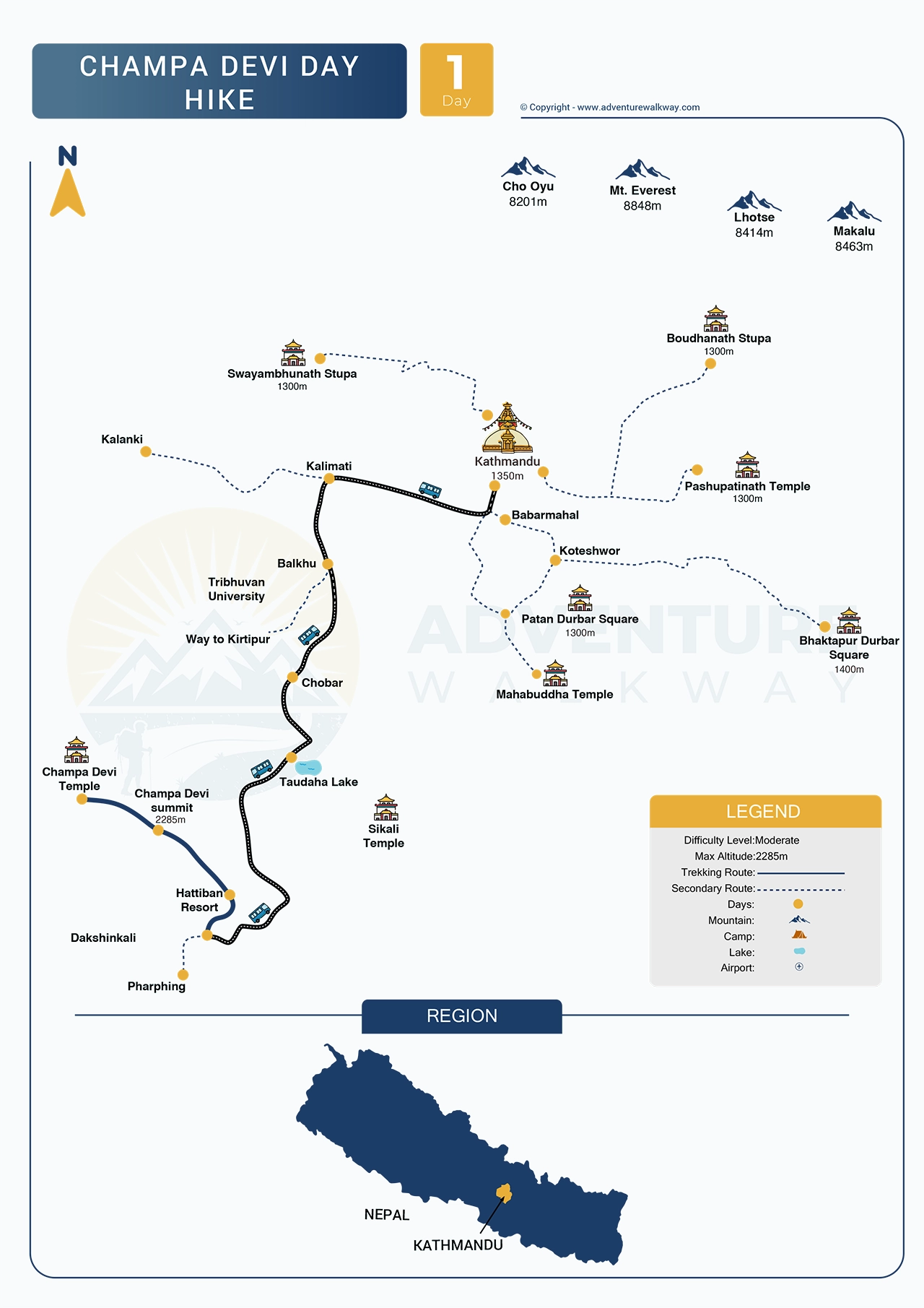
There are several ways to reach Champa Devi, with Hattiban and Pharping being commonly used starting areas. The location of your hike will be determined before the trip, depending on the chosen path, distance of walk and how active you want to be. Our guide will provide you with an information about the route before the walking part begins.
| Route / Activity | Walking | Main Plan |
| Kathmandu – Hattiban / Pharping | Drive | Morning pickup and drive to the selected trailhead |
| Trailhead – Forest Trail | Uphill walk | Begin the hike through the forest |
| Forest – Champa Devi Ridge | Uphill walk | Continue towards the higher sections with short rest stops |
| Champa Devi Ridge – Summit | Uphill walk | Reach the summit area and visit the local shrine |
| Summit | Rest | Lunch, photographs and time to enjoy the surroundings |
| Champa Devi Summit – Trailhead | Downhill walk | Follow the route back towards the starting point |
| Trailhead – Kathmandu | Drive | Meet the vehicle and return to your hotel |
Highlights of Champa Devi Day Hike
- Walk through the forested southern hills of Kathmandu Valley
- Reach Champa Devi Hill at around 2,278 meters
- See the shrine and Buddhist attractions at the top.
- Get a panoramic view over Kathmandu Valley on clear days.
- Take a stroll in the pine forest and the rhododendron forest.
- Spend all day in the outdoors without an overnight.
- Explore the city with a local guide and private transportation.
Itinerary of Champa Devi Day Hike
Starting the Day
We will pick you up from your hotel in Kathmandu in the morning and drive towards the selected trailhead. The actual driving time depends on your hotel location and traffic. Before leaving the vehicle, our guide will explain the route and check that everyone has enough water and suitable footwear.
Beginning the Walk
The walking section starts away from the busy parts of Kathmandu. The first part of the trail gradually gains height, and the surroundings become more wooded as you move farther from the road.
There are several routes towards Champa Devi, so the exact character of the first part can change. The Hattiban route is commonly used for a shorter climb, while the Pharping side gives a longer walking option. Current route sources also identify Pharping, Hattiban and other nearby points as possible access areas.
Walking Through the Forest
The middle section is where the walk becomes more like a hill hike. The trail passes through forest and continues upward along the ridge. Depending on the season, you may see different vegetation and hear birds in the quieter sections.
We will not set an unnecessarily fast pace. A steady rhythm works better on a route with continuous uphill walking. Short breaks are also useful for water, photographs and enjoying the surroundings.
Reaching Champa Devi
After several hours of walking, the trail reaches the higher part of Champa Devi. The summit area is associated with both Hindu and Buddhist traditions and has a small shrine and Buddhist structure with prayer flags.
You can spend some time here before lunch. If the weather is clear, the higher position gives you a wider view of the Kathmandu Valley and surrounding hills.
Lunch and Rest
Lunch is arranged as part of the package. We will choose a suitable place for the group to rest near the summit area, depending on the route and conditions.
This is also the longest rest period of the day. You can eat, drink water, take photographs and enjoy some quiet time before beginning the descent.
Walking Back
After the break, we will start walking downhill. Depending on the confirmed route, we may return by the same trail or use a different descent where practical.
The downhill sections can feel easier on your breathing, but you still need to pay attention to your footing. Wet stones, roots and uneven sections can become slippery during or after rain.
Return to Kathmandu
Once the walking section is complete, our vehicle will take you back towards Kathmandu. The final arrival time depends on the selected route, walking speed, rest breaks and traffic.
Route Map of Champa Devi Day Hike
Trip Information
Champa Devi Day Hike Cost
The cost depends on the number of people travelling together and the transportation arrangement. The following figures are estimated rates for planning purposes, not fixed published prices. Adventure Walk Way will confirm the final price before your booking.
| Group Size | Transportation | Guide | Entry Fee | Lunch | Estimated Cost |
| 1 person | Private | Private guide | No standard park permit | Included | US$ 70 |
| 2 people | Private | Private guide | No standard park permit | Included | US$ 50 per person |
| 3 to 5 people | Private | Private guide | No standard park permit | Included | US$ 40 per person |
| 6 or more | Private | Group guide arrangement | No standard park permit | Included | US$ 35 per person |
The usual Champa Devi hiking routes do not require a Shivapuri Nagarjun National Park entry permit. If there are any changes to local access rules or the selected route, we will check the requirements before your trip.
The estimated cost may change according to your group size, starting point, transportation requirements and any additional service you request. We will explain the final cost clearly before confirming the trip.
If you prefer a different starting point or want to combine the hike with another nearby visit, please tell us before the trip so that we can check the timing and transportation.
Difficulty and Walking Experience
Champa Devi is a moderate day hike for most reasonably active walkers. The main challenge is not technical climbing but the steady gain in elevation over several hours.
The summit is around 2,278 meters, while the starting point is much lower. This means the route involves a noticeable climb rather than simply walking along a flat ridge. The walking time depends on the selected starting point.
The Pharping approach generally involves a longer and more sustained climb, while the Hattiban route can provide a shorter hiking option. We will confirm the route and expected walking time before the trip.
Beginners can join if they are comfortable walking uphill. You do not need ropes, climbing equipment or previous high altitude trekking experience. However, someone who rarely walks or exercises may find the continuous climb tiring.
The descent also needs attention. Going downhill for a long period can put pressure on the knees, especially on uneven ground. Good shoes and a controlled pace make a noticeable difference.
For preparation, regular walking is enough for most people. Try adding some stairs or gentle uphill walking if you have time before the trip. This helps your legs get used to the type of movement required on the trail.
Our guide will keep the group together and adjust the pace when necessary. We would rather take a few extra breaks than make the hike uncomfortable by trying to maintain an unnecessarily fast schedule.
Best Time for Champa Devi Day Hike
Champa Devi can be visited throughout the year, but the trail changes with the seasons. Autumn generally provides comfortable walking conditions and clearer views, while spring brings warmer weather and seasonal vegetation.
Winter can also be a good period for the hike when the weather is clear. The mornings can be cold, so carrying an extra layer is useful.
The monsoon months bring more uncertainty. Rain can make forest paths muddy and slippery, and clouds can hide the views from the ridge and summit. Current hiking sources generally recommend the drier months, particularly October through April, for better trail and visibility conditions.
| Season | What to Expect | Trail Experience |
| Spring March to May | Mild days and generally good visibility | Comfortable for walking, with seasonal greenery and flowers |
| Monsoon June to August | Frequent rain, clouds and higher humidity | Wet or muddy sections can make the trail slower |
| Autumn September to November | Pleasant temperatures and clearer days | Usually the most comfortable period for hiking |
| Winter December to February | Cool mornings and dry weather | Good walking conditions, but a warm layer is useful |
The most appropriate time also varies with what you desire of the day. If clear mountain views are important to you, the drier months are a safer choice. If you are mainly interested in walking through the forest and spending time outdoors, the hike can still be enjoyable outside the peak seasons.
We will look at the forecast prior to departure and inform you whether the weather can influence the route.
Transportation and Starting Point
Champa Devi has more than one established approach, which is important to understand when planning the trip. Hattiban and Pharping are both usually listed as entry points, and other paths may link the hill to locations along the southern and western sides of Kathmandu Valley.
To enjoy a day hike with Adventure Walk Way on a personal basis, we will choose the starting point depending on the path that we have agreed on with you. Hattiban can be used in case a shorter day of hiking is desired. Pharping works well when you want a longer walk and more time on the trail.
The drive from central Kathmandu is generally manageable within the morning. Traffic can make the actual journey longer, so we prefer to allow some extra time rather than promise an exact driving duration.
Private transportation is included in the estimated package. This means you do not need to arrange a local taxi or public bus for the trailhead yourself.
After the hike, our driver will collect the group from the agreed ending point. If we use a point to point route, we will arrange the vehicle accordingly.
What the Walk Is Like
The landscape changes gradually as you move away from the city. The beginning of the trip involves a drive through the southern side of Kathmandu Valley, followed by the start of the walking route.
The upper trail passes through forested areas, with pine and rhododendron mentioned in descriptions of the Champa Devi routes. Some sections follow a ridge, while other parts climb steadily through the trees.
This makes the hike different from walking on a road or visiting a viewpoint by vehicle. You gain the views slowly as you walk.
Depending on the route, you may also pass rural settlements, farmland and local religious sites. We will explain what you are seeing along the way without turning the walk into a formal sightseeing tour.
The forest can also provide shade during warmer weather. During spring, some rhododendron sections may have seasonal flowers, although the amount of flowering depends on the year and weather.
Trail conditions are not identical throughout the route. Some sections are wide and easy to follow, while others can have roots, stones or steeper ground. After rain, these parts require more attention.
Views from Champa Devi
The higher sections of Champa Devi provide a wide outlook over Kathmandu Valley. On a clear day, you can see the developed parts of the valley below along with surrounding hills and rural areas.
Mountain visibility depends heavily on weather. Several hiking sources mention views towards ranges including Langtang and Ganesh Himal, while wider views may be possible in particularly clear conditions.
We do not assure a specific mountain view because haze is common around Kathmandu. Clouds can also develop quickly, especially during the wetter months.
The summit itself is a good place to take a break because the surroundings open up compared with the forest sections below. You can sit for a while, have lunch and look across the valley before returning.
The view is not the only reason to do the hike. The gradual change from city surroundings to forest and open ridge is part of the walking experience.
Food and Drinking Water
Lunch is included in the estimated package. We arrange a practical meal that can be carried easily and eaten during the rest period.
If you have a dietary requirement, please tell us before the hike. We can discuss suitable food arrangements before departure.
Bring enough water for several hours of walking. Around 1.5 to 2 litres is a sensible amount for most people, although your needs depend on the weather, your walking pace and how much you normally drink.
A few small snacks are also useful. Fruit, nuts, biscuits or an energy bar can help during the climb.
We do not recommend depending on finding food or drinking water on the upper trail. It is better to leave Kathmandu prepared with the water and snacks you need.
Please carry your rubbish with you until you find a suitable place to dispose of it. Keeping the trail clean is part of being a responsible visitor.
What to Bring for Champa Devi Hiking
- Comfortable hiking shoes with a good grip
- Small daypack
- 5 to 2 litres of drinking water
- Light snacks
- Light jacket or warm layer
- Rain jacket during the monsoon
- Hat or cap
- Sunglasses
- Sunscreen
- Personal medication
- Phone or camera
- Power bank
- Small first aid items
- Some cash for personal expenses
You do not need a large trekking backpack for this trip. A small daypack is enough for your water, food, clothing layer and personal items.
Wear shoes that you are already comfortable walking in. A new pair of shoes should not be used for the first time on the hike because discomfort or blisters can make the day difficult.
During the rainy months, keep your rain jacket somewhere that is easy to reach. A small waterproof bag can also help protect your phone and other electronics.
Fitness and Preparation
A little preparation can make Champa Devi much easier. You do not need a special training programme, but regular walking before the trip is useful.
If you have two or three weeks before the hike, try walking several times a week. Include some stairs or gentle uphill sections when possible. This helps your legs adjust to continuous climbing.
Try not to start the morning without food. Have a normal breakfast and carry water for the trail.
The most common mistake beginners make is starting too quickly. The first part of the climb may feel easy, but the effort adds up over several hours. A steady pace is more useful than trying to stay ahead of the group.
If you are not used to hiking, tell us when making the booking. We can take this into account when planning the route and timing.
Mobile Network and Connectivity
Mobile coverage can change as the trail moves through forest and more rural sections. You may have a signal in some places and a weaker connection in others.
For this reason, it is better to tell your family or friends about your hiking plans before leaving Kathmandu. Do not rely on continuous phone service throughout the trail.
Your phone is useful for photographs and emergency communication where a signal is available. Make sure it is charged before leaving the hotel.
A power bank is helpful if you plan to take many photographs or use your phone for navigation.
There is also no need to stay on your phone throughout the walk. Some of the quieter forest sections are a good opportunity to put the phone away and simply walk.
A Few Things to Keep in Mind
The Champa Devi route does not require technical climbing skills, but normal hiking precautions still matter. Stay close to the guide and let us know if you feel tired, dizzy or uncomfortable.
The trail can become slippery after rain. Stones, roots and uneven ground are easier to manage when you slow down and pay attention to where you place your feet.
Drink water regularly rather than waiting until you become very thirsty. Take breaks when necessary, particularly during the uphill sections.
Weather can also affect the experience. If there’s cloud or rain moving in, the trail may get wetter and visibility may decrease. Our guide will be keeping an eye on the weather and help us decide if the planned route should go ahead as usual. Please respect religious sites locally along the trail.
Do not touch religious objects without permission and keep noise levels down near shrines and prayer areas. Do not leave plastic, food wrappers or other rubbish on the trail. If you see wildlife, keep your distance and never attempt to feed or approach animals.
The purpose of the guide is not only to show you the route. We will also help manage the pace, route decisions and practical issues that may come up during the day.
Why Choose Adventure Walk Way for Champa Devi Day Hike?
Adventure Walk Way arranges Champa Devi as a practical private hiking day from Kathmandu. We understand that people choose a short hike for different reasons. Some want time away from the city, some want a little exercise before a longer trek, and others simply want to spend a day walking in the hills.
Our approach is to keep the arrangements clear from the beginning. We confirm the starting point, transportation, guide, meal arrangement and expected walking time before the trip.
A local guide accompanies the group during the walk. The guide can explain the route, help with pacing and point out places of interest along the way.
Private transportation also makes the day easier because you do not need to find a taxi to the trailhead or arrange a ride back after several hours of walking.
We do not expect every guest to walk at the same speed. If someone needs a short rest, we can stop. If the group is comfortable, we can continue without unnecessary delays.
Weather and trail conditions can also affect the day. We will discuss any significant changes with you rather than making assumptions.
Our aim is simple: arrange a well planned day, provide practical support on the trail and make sure you know what to expect before you start walking.
Frequently Asked Questions
The total duration depends on the selected route, walking pace, rest breaks and traffic. A shorter Hattiban route generally takes less time, while the Pharping approach requires a longer walking period. We will confirm the expected schedule before the hike.
Champa Devi is generally listed at around 2,278 meters above sea level. Some current commercial sources use 2,285 meters, so you may see both figures online. We use approximately 2,278 meters when describing the hill because this figure is also supported by established route references.
There is more than one route to Champa Devi. Hattiban and Pharping are two commonly used starting areas. Adventure Walk Way will confirm the starting point with you before the trip based on the route and walking time selected.
The usual Champa Devi routes are outside Shivapuri Nagarjun National Park, and current route information states that no national park entry permit is required.
If local rules or access arrangements change, we will check the requirements before your trip.
Yes, depending on the available time and selected route. Any additional visit should be discussed before the hike so we can check transportation and timing.
Yes, but the conditions may be less predictable. Rain may leave the trail muddy and slippery and clouds may obscure the sceneries. In case of heavy rains, we can talk about rescheduling the date at a time when you can travel.
Bring comfortable hiking shoes, a small backpack, enough water, snacks, sun protection and a light jacket. A rain jacket is particularly useful during the monsoon. You do not need a large trekking bag because this is a one day trip.
Children who are comfortable walking uphill for several hours can join. Their age, fitness and previous walking experience should be considered before booking. Families should be prepared to take additional breaks if needed.
Yes. Adventure Walk Way can arrange the trip as a private hike with your own vehicle and guide. This allows your group to be more flexible on the pace and the timing of walking.
Mountain oversees can be achieved during clear days. Sources describing the route mention views towards ranges such as Langtang and Ganesh Himal.However, haze, clouds and weather can limit visibility, so we cannot guarantee a particular mountain view.
Yes, beginners may attend provided they are fairly active, and can walk uphill several hours without discomfort. The trail does not require technical climbing skills. Regular walking and some stair practice before the trip can make the climb easier.
Yes, lunch is included in the estimated package price shown on this page. We arrange a practical meal for the hiking day. Please tell us in advance if you have a dietary requirement.
You should not depend on finding drinking water along the upper trail. We recommend carrying enough water from Kathmandu or the starting area. Around 1.5 to 2 litres is suitable for many hikers, although your personal requirement may be higher in warm weather.
Yes. The continuous uphill and downhill walking can help you practise pacing and build basic walking fitness. It can be particularly useful before a longer trek. However, a day hike does not replace preparation for high altitude or multi day trekking.
Send us your preferred date, number of people and hotel location in Kathmandu. We will check the route, transportation and guide availability and provide the final cost. Once the arrangements are confirmed, we will share the pickup time and other information needed for the day.
Trip Reviews
Dipendra Dhakal
+977-9851093471 (Whatsapp)Meet Mr. Dipendra Dhakal, a pioneer of Nepal tourism, who began his career as a trekking guide and has extensive experience in tour management and itinerary planning.